Community Emergency Hub Resources
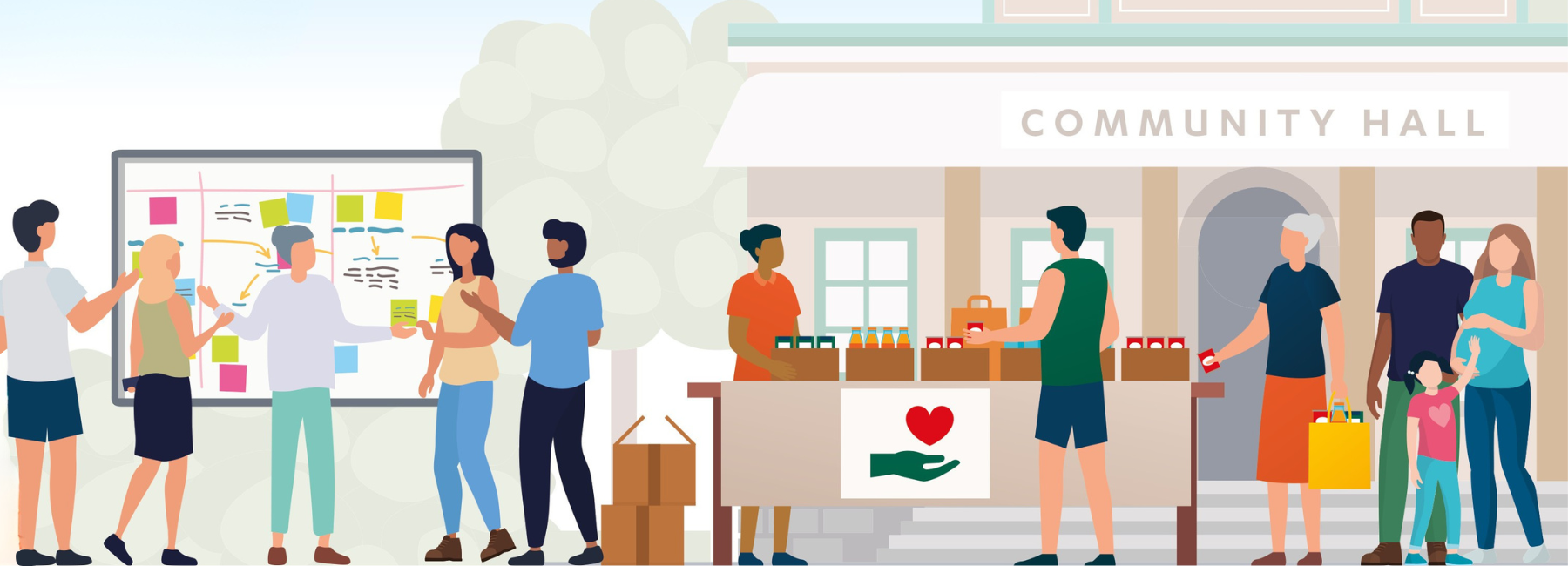
Community Emergency Hubs are places where community members can share information, connect, and solve problems together in times of disaster.
The tools on this page have been reviewed and reworked by Northern Rivers communities for ALL communities that don’t yet have government-led hub programs.
Together, we build on the Community Emergency Hub model developed by the Wellington Region Emergency Management Office (NZ) and the Hub Guide, adapted for Australia, by the Yarra Ranges Council.
What is a Community Emergency Hub?
A Community Emergency Hub is a place where local people come together to:
- Share information about what is happening
- Check in on each other’s safety and needs
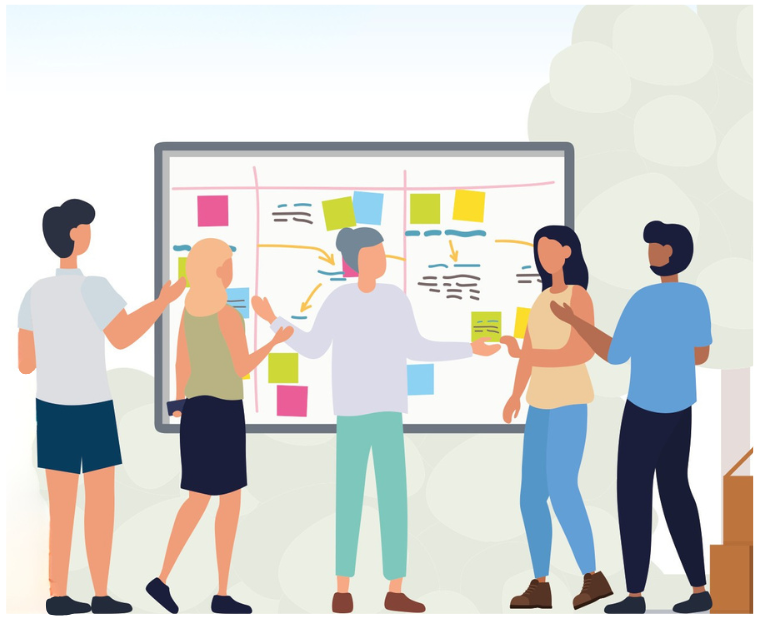
- Match offers of help with people who need support
- Coordinate practical problem-solving with whatever resources are available.
A Hub can be located at any local gathering space — a hall, shed, church, or a pop-up marquee!
What’s in the Guide?
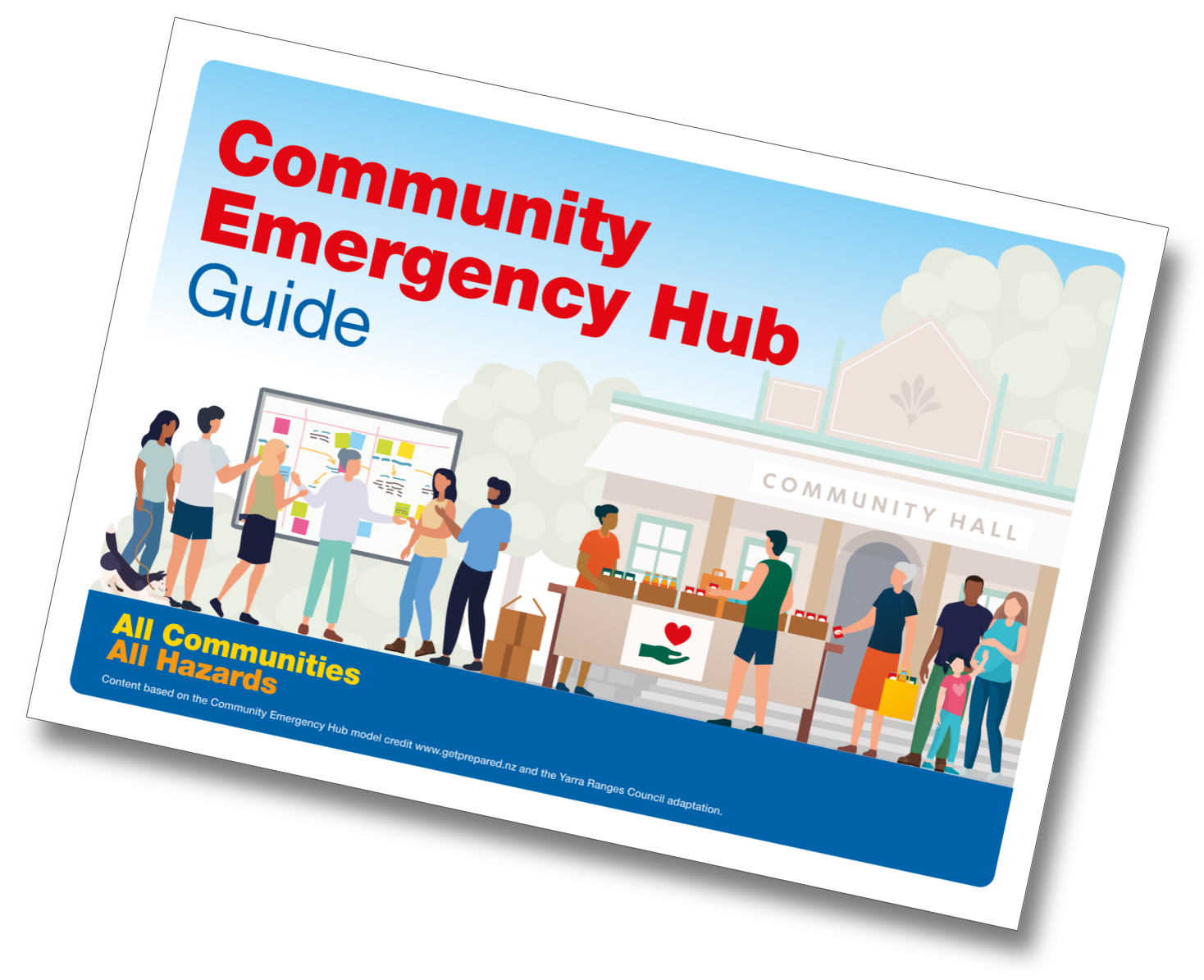
This guide is designed so that anyone, anywhere, can pick it up and use it in times of disaster.
It includes:
- Simple steps to open and run a Community Emergency Hub
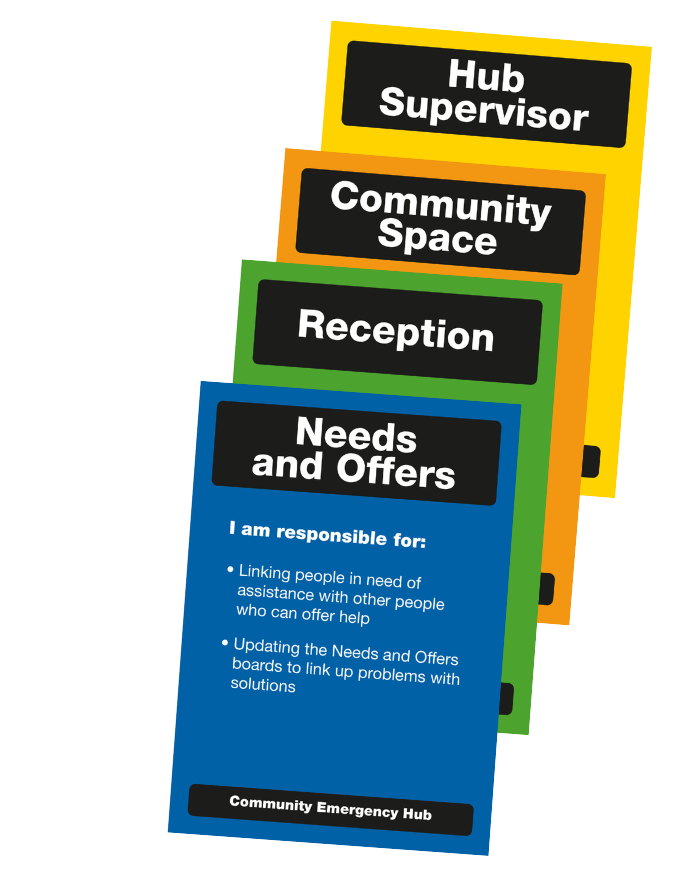
- Clear roles for volunteers, with short role descriptions and checklists
- How to set up information boards and keep messages accurate and up to date
- A process for matching needs (people needing help) with offers (people who can help)
- Basic guidance on safety, comfort, and looking after volunteers
What’s in the Resource Pack?
This Resource Pack is your Hub Guide companion – simple, ready-to-use tools to help your community put the guide into action, print lanyards, and prepare together in advance.
It includes:
- Printable role cards to make lanyards
- Separate print files for home or professional printing
- Editable templates for rosters, information logs and role registers
- Editable Community Emergency Response Plan (to help your community plan ahead)
- A ‘Start Here’ document so you can navigate the Resource Pack in an emergency
Want to hear when new resources are added?
We only email when there’s something useful to share. No spam, no constant newsletters.
Shaped by Northern Rivers Communities
This version of the Community Emergency Hub Guide was adapted for the broader Australian context by Resilient Uki on Bundjalung Country, working alongside members of these Community Resilience Groups:
Bangalow Community Resilience Network, Burringbar Community Resilience Team, Coorabell Community Resilience Team, Mullumbimby Community Resilience Team, MCORE – Murwillumbah, Together Pottsville, Resilient Uki, Tumbulgum Community Association, South Golden Beach, New Brighton, Ocean Shores Community Resilience Team, Wilsons Creek, Huonbrook, Wanganui Community Association.
These groups belong to urban coastal communities, hinterland localities, and townships big and small — each facing different risks, resources and constraints.
A note from the Project Coordinators
We build on the groundbreaking work of Dan Neely and Pooja Kulkarni from the Wellington Region Emergency Management Office (WREMO), NZ, and Kelly Hofert, Kym Mallamaci, and Lisa Keedle from Yarra Ranges Council, who continue to champion this model in the Australian context. We are deeply grateful for the way you shared these resources so we could adapt them. In every interaction, you’ve modelled what a genuine partnership between community and agencies can look like, and we hope to carry that approach forward in our own work.
This adaptation of the Guide draws on the lived experience of groups who opened Hubs in Tweed and Byron Shires during the devastating 2022 floods, and of groups who are preparing their communities for what comes next. Thank you for volunteering your time and energy to create this resource so that others may benefit from your lessons. We are honoured to work alongside you.
This project was made possible with funding from the Northern Rivers Community Foundation.
Project Coordinators Mel Bloor and Bec Talbot, 2025.
More Info
How this Guide is different
The Wellington Region and Yarra Ranges Community Emergency Hub Guides were developed by government agencies. In contrast, this adaptation has been developed by community leaders in places where government agencies do not lead the development of Community Emergency Hubs.
Initially, we sought to create a workable Hub Guide for the communities of the Northern Rivers. In the process of adapting the guide, we realised our version might meet the needs of other communities further afield without government-led hub programs.
| Applicable for all hazards | Remove references to specific hazards (hazard agnostic) |
| Accessible for community | Readable fonts, simple English, condensed, in community terms (not emergency management terms) |
| Applicable in all States of Australia (with a view to international application) | Terms as generic as possible e.g. RFS/SES becomes “emergency services” |
| Applicable to areas where there is no formal support to develop Community Emergency Hubs (primary goal) | Removing references to expected government support |
| Applicable to areas where no Community Emergency Hub preparations have been made (can be downloaded as a usable tool during disasters) | Removing references to Community Emergency Hub preparations made in advance of disasters |
| Applicable to the reality of disaster chaos (not based on best practice guidelines that are likely to be thrown out the window in a disaster) | Pragmatic lens around restrictions e.g. “canned food” replaced with “food” |
Community supporting community — alongside offical agencies
This guide does not replace official agencies like emergency services or government responses.
Community Emergency Hubs:
- Support community members to care for each other
- Help share reliable information into and out of the community
- Focus on practical, local problem-solving — not on rescues or high-risk activities
- Make it easier for official agencies to understand what’s happening on the ground
When official agencies are able to respond, the Hub can help connect them with local knowledge and existing community efforts.
Note on insurance and support
When something goes wrong, community steps up.
People look out for each other and do what they can with what they’ve got. That’s a strength – and it’s at the heart of this guide.
At the same time, self-organising community members often lack formal insurance. Existing groups may also find that their insurance doesn’t cover certain activities, or doesn’t clearly extend to volunteers helping in an emergency.
Please note: This guide does not provide legal or insurance advice.
If you are part of an organisation, it’s a good idea to check with your insurer or governing body about what is and isn’t covered.
Contact Us
Email: [email protected]
What would make these resources work better for your community?
While we have you… Please take a moment to let us know a bit more about your community. It will inform future updates and help us – Resilient Uki – to continue this work. In exchange, we’ll let you know when new resources go live.